

Summer update: From the Chief Executive
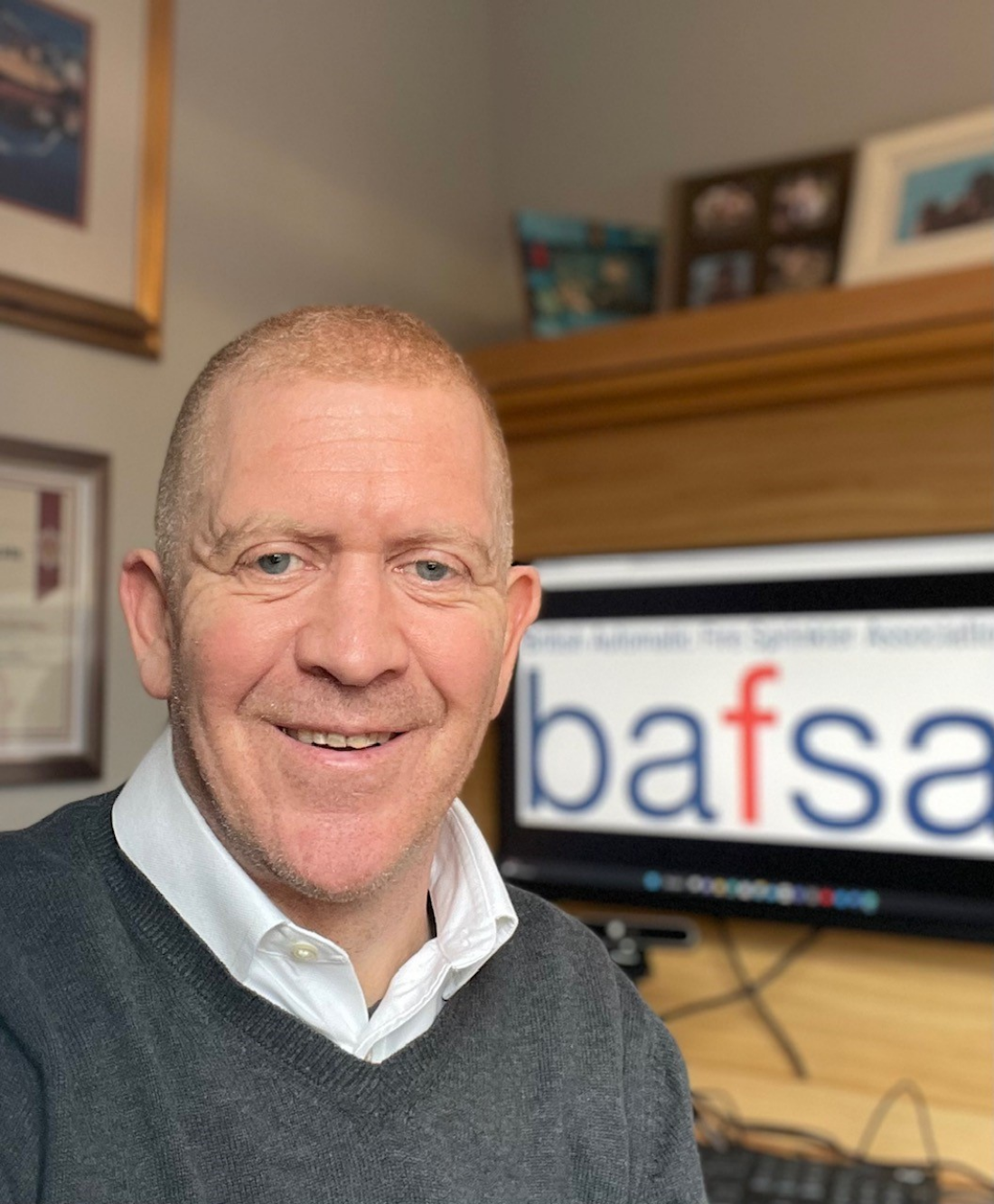


Influencing policy, strengthening competence and championing sprinklers
This summer has been another exceptionally busy period for BAFSA as we continue to represent our members across government, parliament, industry and the wider built environment.
Much of this work happens behind the scenes, but the objective is consistent: to strengthen the sprinkler industry and increase recognition of automatic fire suppression as an essential component of modern fire safety.
Making the case for sprinklers
Education and evidence remain central to BAFSA’s work. During the month, I supported BAFSA’s Joe McCafferty in presenting ‘An Essential Guide to Fire Sprinklers’ to the Institute of Fire Safety Managers. With 238 delegates registered, the webinar provided an excellent opportunity to explain the principles, performance and application of sprinkler systems to fire safety professionals from across the UK.
I also presented at the Fire Safety Matters Conference in Coventry on 2 July, focusing on sprinklers in schools and the business case supporting their inclusion in new school buildings. The presentation drew on the findings of our Optimal Economics schools report, which provides important new evidence on the cost-benefit case for sprinkler protection in education buildings.
Opportunities such as these are important because misconceptions about sprinklers still influence decisions. BAFSA has a key role in ensuring that policy makers, building owners, fire safety professionals and others have access to clear, credible and evidence-based information.
Strengthening BAFSA’s evidence base
During June we completed a comprehensive analysis of the UK sprinkler industry, reviewing third-party certificated sprinkler installers to develop a detailed assessment of the proportion of the UK sprinkler market represented by BAFSA. This work gives us a stronger evidence base when engaging with government, regulators and other stakeholders and helps demonstrate the breadth of expertise represented within the Association.
Influencing national policy
BAFSA continues to ensure that the sprinkler industry has a voice in important national discussions on fire and building safety. I represented the Association at the All-Party Parliamentary Group on Fire & Rescue, contributing to discussions on the Building Safety Regulator, competence and the continuing programme of post-Grenfell reform.
Later in the month, BAFSA Technical Chair Richard Cebreiro and I provided oral evidence to the House of Lords Justice and Home Affairs Committee as part of its inquiry into fire safety in prisons. Being invited to contribute directly to Parliamentary scrutiny is an important opportunity to ensure that the experience and evidence of the automatic fire suppression sector informs the debate.
Driving competence and raising standards
Competence remains one of BAFSA’s core strategic priorities. During July I took part in meetings of the Industry Competence Steering Group and the Part B Impartiality Committee, alongside our External Quality Assurance review. Following the EQA visit, further discussions were held with ABBE to consider the feedback and ensure that BAFSA qualifications continue to meet the standards expected of the industry.
I also met with Springburn College to discuss future education and skills development. Developing the next generation of competent sprinkler professionals, while providing meaningful routes for experienced people to demonstrate and develop their competence, will remain a major focus for BAFSA.
Research and sustainability
Our work to strengthen the evidence surrounding automatic fire suppression also continues. The project examining the effectiveness of sprinklers on lithium-ion battery fires has produced an interim report, with two further tests planned for later in the year. A further project meeting will take place in August to confirm the next phase of testing.
BAFSA has also continued its engagement with the Alliance for Sustainable Building Products as work progresses on an environmental roadmap for the sprinkler industry. Fire safety and sustainability should not be viewed in isolation: effective suppression can reduce the scale of fire damage, the resources required for reconstruction and the wider environmental consequences of major fires.
Supporting our members and working across the sector
Alongside our external work, we continue to focus on the services and support BAFSA provides to members. During the month I met with Ruth Oliver to review progress across our education and training programme and took part in Council working group discussions on membership and financial matters.
The BAFSA team also came together for another successful Challenge Day. My thanks go to Claire Mahoney for organising and coordinating the event, Vicky Cuff for her support, and to the wider team for their contribution.
I also attended the Fire Sector Confederation, where BAFSA continues to work collaboratively with partner organisations to influence policy, improve standards and promote proportionate, evidence-based approaches to fire safety.
Looking ahead
The pace of activity shows no sign of slowing. Over the coming weeks BAFSA will continue to influence policy, develop competence, strengthen training, promote sustainability and make the evidence-based case for the wider use of automatic fire suppression.
None of this work is achieved by one person or by the BAFSA team alone. I would like to thank our Council members, committee members and consultants for the expertise, time and commitment they continue to give to the Association. Their support enables BAFSA to achieve far more than would otherwise be possible.
Together, we continue to strengthen both the Association and the UK fire sprinkler industry.
Alasdair Perry
Chief Executive Officer
British Automatic Fire Sprinkler Association