08.10.26
Northamptonshire warehouse distribution hub sprinkler activation
Read More



BAFSA’s Sprinkler Saves project aims to raise awareness of how the devastating effects of fire can be mitigated and, in many cases, prevented through the enhanced use of Automatic Water-Based Suppression Systems (AWSS).
We achieve this by encouraging Fire and Rescue Services (FRS) and our sprinkler industry colleagues across the UK to report all types of sprinkler and water-mist activations resulting from fire incidents they have attended. These incidents are recorded on the Sprinkler Saves website and in our annual review. Each case documents the impact and benefits of the AWSS.
The details of these incidents provide a valuable evidence base for challenging myths and misconceptions about the safety, reliability and effectiveness of sprinkler and water-mist systems. They also demonstrate the important role AWSS can play in protecting people, property and communities from fire.
A sprinkler save occurs when one or more sprinkler heads activate to control or extinguish a building fire, providing powerful, real-world evidence of the effectiveness of sprinklers in reducing the impact of fire.
The promotion of reported AWSS activations is however dependent on the goodwill and resources of both the Fire Rescue Service and sprinkler industry itself.
We therefore encourage both parties to share details of AWSS activations with us using the form below so we can continue our work in creating a central and comprehensive database of fire incidents where AWSS have played their essential role in suppressing and/or extinguishing fire.
Thank you
Nick Coleshill, BAFSA sprinkler ambassador and Sprinkler Saves co-ordinator

Sprinkler Saves is a collaborative project supported by the following fire safety bodies
“In bringing together and sharing real life examples of where sprinklers have had an impact, Sprinkler Saves has become a vital resource in helping to demonstrate the difference they make.”
Phil Garrigan, Chair of the National Fire Chief Council (NFCC)
"The data is compelling, but it is the real world stories behind each activation that truly demonstrate the value of water-based fire suppressionThese are not abstract statistics; they are verified outcomes that speak to the life changing impact of well-designed, well maintained sprinkler systems."
Terry McDermott, Secretary, National Fire Sprinkler Network (NFSN)
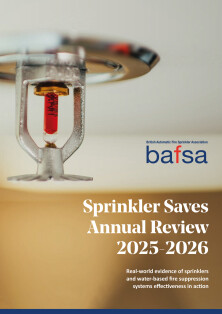
Our Sprinkler Saves Annual Review provides important data for legislators, industry and other interested parties on how effective sprinklers are at doing their job.
It demonstrates the vital role sprinklers play in fire safety by highlighting real, tangible examples of where they have activated and in doing so saved life and protected property. The story around the incident provides powerful evidence of the ability of sprinklers to protect life, firefighters, and property from fire.
"This review stands as a powerful reminder of what can be achieved when proven technology, professional expertise, and a commitment to public safety come together. We welcome its findings and fully support the continued expansion of water-based fire suppression as a cornerstone of fire safety in the UK "
Terry McDermott National Fire Sprinkler Network