

School fire underlines urgent need to protect new education buildings
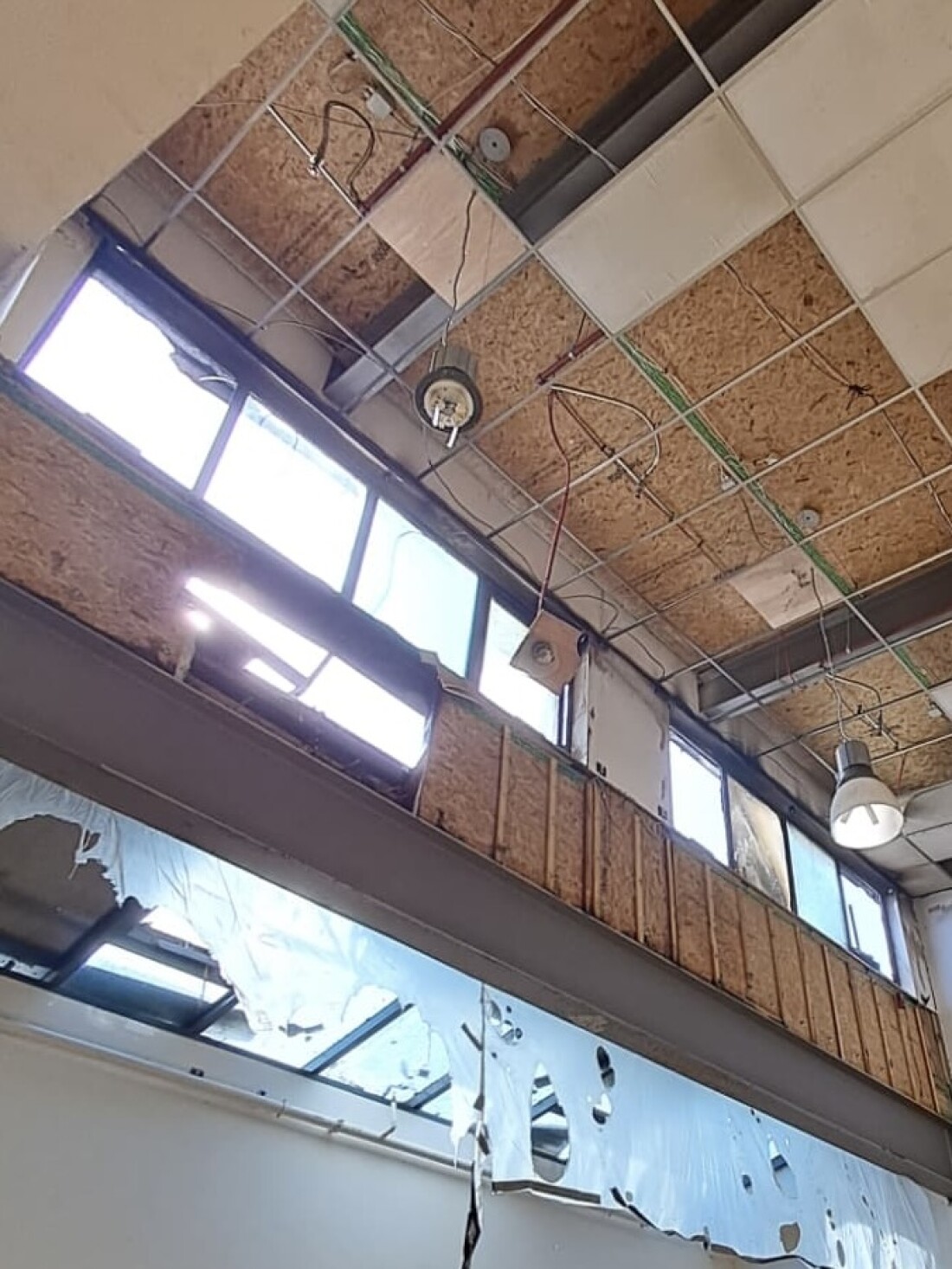


In July a fire at a Wales primary school involving sandwich panels was prevented from spreading into the primary building following the activation of the building sprinkler system which contained and controlled the fire.
This latest incident in Port Talbot reinforces why sprinklers matter. The sprinkler system did what it was designed to do, it contained the fire, limited fire damage contributing to keeping a vital educational building in use without that protection, the outcome could have been very different.
BAFSA, working in conjunction with the NFSN and the National Fire Chief Council, (NFCC) is urging ministers to act on the evidence and ensure that new schools and colleges in England are designed with automatic fire suppression from the outset. The association says the cost of prevention is far outweighed by the human, educational and financial consequences of a major school fire.
picture courtesy Compco Fire Systems
During a holiday play group lesson, the alarm was raised to a fire in the school building resulting in the evacuation of the building. Upon the arrival of Mid and West Wales Fire Service, it was confirmed that the building’s sprinkler system had activated following a fire involving the building sandwich panels. Six sprinkler heads activated, four in the main hall with the remaining two in the family room, containing and controlling the fire from spreading into the school building.
Firefighters wearing breathing apparatus extinguished the fire using firefighting media consisting of two jets, turntable ladder and a water bowser. Thankfully, no injuries were reported. Enquires are ongoing to establish the cause of the fire
Fortunately, the fire caused limited damage within the school building due to the presence of the sprinkler system. The school reopened for all pupils in September 2026 and classrooms were ready for the new start of the new term. It is anticipated that further work may be required to reinstate the school hall.
If it was not for the presence of the sprinkler system, the outcome of this incident could have been so much different resulting in the loss of a critical local infrastructure, providing not only education but also community services, support networks and spaces for local groups.
The images show that the sprinkler heads nearest to the windows activated - six in total preventing the fire from spreading into the main school hall and adjacent family room.
By contrast, the 2020 fire at Harrington Junior School in Derbyshire, where sprinklers were not installed, caused far greater disruption. The school was destroyed, forcing 235 pupils to be taught in a local family centre for eight weeks before moving into temporary accommodation. They remained there for two years while a new £5.5 million school was built.
Parameters of the sprinkler system
The objective of the AWSS is to detect a fire in its early stages and extinguish it over the affected area of the floor with water in the room of origin, or to contain the fire so that it can be effectively extinguished by other means. On this occasion it appears that a fire was allowed to develop, grow and spread for an undetermined period, ultimately resulting in the emergence of the fire within the building.
The consequences of this event had the potential to exceed the systems design and operational parameters. Nevertheless, six sprinkler heads activated contributing to containing the fire preventing further fire spread. Enquires are ongoing to identify the cause of the fire.
Business Recovery Plan
Firefighters are increasingly likely to respond to incidents in buildings equipped with sprinkler systems, it is therefore critical for building managers and duty holders to integrate an effective business recovery plan into the premises’ emergency protocols. The benefit of which will allow the fire service to efficiently manage water following sprinkler system activation during a fire or in the rare event of accidental discharge, thereby mitigating potential disruptions to business operations or occupancy.
Current legislative position
It is a requirement in Scotland and a condition of government funding in Wales, but despite the rising number of school fires since the lockdowns of 2020/21 there is no requirement in England or Northern Ireland for the installation of sprinklers in schools. The NFCC report that in May 2021, the government announced a proposal to make the installation of sprinklers mandatory in new schools over 11m in height. However, given that only a few schools currently meet this threshold, the benefits of this proposal are likely to be limited.
When replying to the consultation on these proposals, the NFCC was clear that their strongly held belief is that they constitute a lessening of standards from previous guidance. The original guidance, when first released in 2007, acknowledged the important role of sprinklers and stated that “all new schools should have fire sprinklers installed except in a few low-risk schools.”
BAFSA feels that the proposed changes in the guidance are a retrograde step and represent a real lessening of standards in this area. It is now approaching over five years since the Government first consulted on a revised version of Building Bulletin 100: design for fire safety in schools, we are still waiting for a decision to be announced.
Sprinklers should be mandatory in all newly built schools and colleges in England. At the very least, BAFSA is calling on government to maintain the existing ‘sprinkler expectation’ in any revised version of Building Bulletin 100 (BB100).
If you have knowledge of a sprinkler incident that may contribute to this initiative, please provide the details using the sprinkler activation reporting form available at www.sprinklersaves.co.uk
Further reading
Optimal Economics report what is the cost of fires in schools?