

Residential sprinkler extinguishes kitchen fire in converted apartment block
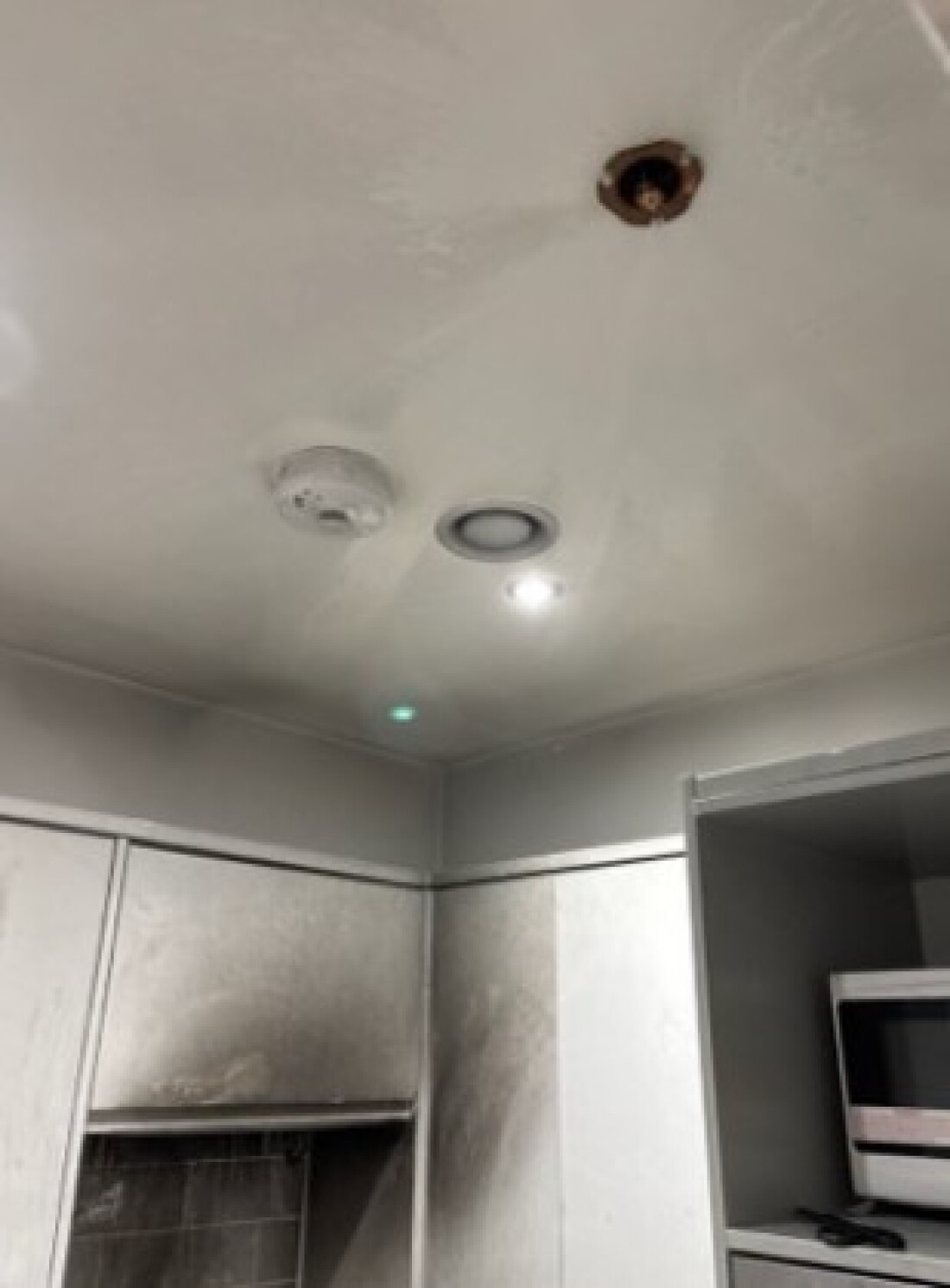


A residential sprinkler system has prevented a kitchen fire from developing further after a concealed sprinkler head extinguished a blaze involving hot cooking oil in a ground-floor flat.
Rad Fire Sprinklers reported the incident to Sprinkler Saves, highlighting the role of residential sprinklers in preventing fire spread and protecting life and property.
The incident occurred in August in a four-storey residential block of flats that had been converted from a former office building. The building was fitted with a residential sprinkler system covering the flats.
The fire started in the kitchen of a ground-floor flat and involved hot cooking oil. As the temperature at ceiling level increased, the heat caused the cover plate of a concealed sprinkler head to disengage from its housing, allowing the sprinkler head to drop into position.
Continued heating caused the heat-sensitive liquid within the sprinkler's glass bulb to expand until the bulb shattered. This released water through the sprinkler head and onto the deflector, producing a uniform spray pattern over the fire.
The sprinkler activation prevented further development of the fire and helped avoid flashover, limiting the potential for fire and smoke spread while reducing the risk to occupants and property.
The incident also provides a practical example challenging the misconception that residential sprinklers should not be used to protect against fires involving cooking oil or chip pans. The sprinkler activated automatically when sufficient heat reached the head and controlled the fire at an early stage.
Evidence of sprinkler activation
Images from the incident show several features demonstrating the effectiveness of the sprinkler system.
There was no direct burning visible above or immediately around the seat of ignition. Smoke staining was visible on the cupboard wall-unit doors directly above the fire and on nearby walls and the ceiling.
A distinctive area of reduced smoke staining can also be seen around the sprinkler head. This spray pattern indicates where water discharged onto the deflector and helped prevent smoke staining in the immediate area.
Sprinkler system specification
The sprinkler system was installed in accordance with BS 9251:2014 – Fire sprinkler systems for domestic and residential occupancies – Code of practice.
The installation was specified as:
-
System category: Category 3
-
Coverage: Flats only
-
Water supply: Shared pump and tank system
The incident demonstrates how an appropriately designed and installed residential sprinkler system can detect and control a developing fire before it has the opportunity to spread, providing valuable protection for occupants, buildings and their contents.
Image credit. Rad Fire Sprinklers