

South Wales retail premises saved by single sprinkler head
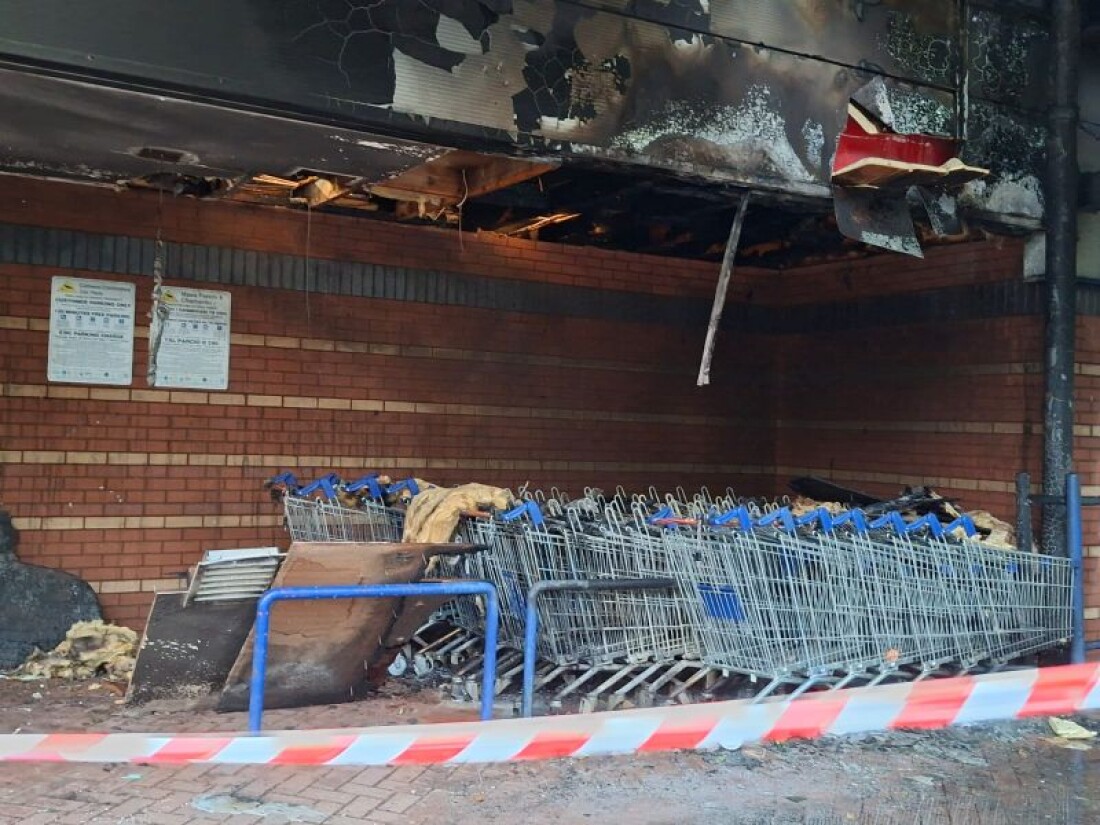


A fire at a retail premises in Port Talbot in the early hours of 7 June 2026 has once again demonstrated the vital role automatic sprinkler systems play in protecting businesses, after a single sprinkler head activated and prevented fire from spreading into the shop floor.
The incident occurred at 1:32am, when a fire started within the external void of the building's front canopy above the trolley park. Although the fire had begun externally, radiant heat generated by the blaze activated one sprinkler head inside the main building, helping to contain the fire before it could develop into a more serious incident.
Mid and West Wales Fire and Rescue Service (MWWFRS) mobilised pumping appliances from local fire stations following reports of the fire. On arrival, firefighters wearing breathing apparatus tackled the blaze, which was located within the external canopy on the building's front façade.
Fire crews removed sections of the canopy soffit to expose the ceiling timber joists, where they discovered the fire had spread into the roof void of the main building. The activated sprinkler head had successfully controlled the shielded fire, significantly limiting its spread until firefighters extinguished the remaining fire using firefighting media. Following confirmation that the fire had been extinguished, crews isolated the sprinkler system via the isolation valve located in the premises' pump house. The stop message confirming the incident was under control was received by MWWFRS Control at 4:33am. Investigations into the cause of the fire remain ongoing. Initial indications suggest the fire originated from an external light fitting.
The incident highlights how automatic fire sprinkler systems safeguard property, minimise financial losses and strengthen business resilience by controlling or extinguishing fires before the arrival of the fire and rescue service. By limiting fire damage, businesses are often able to resume normal operations more quickly, reducing both economic and social impacts.