

Retrofit programme proves worth in high-rise fire
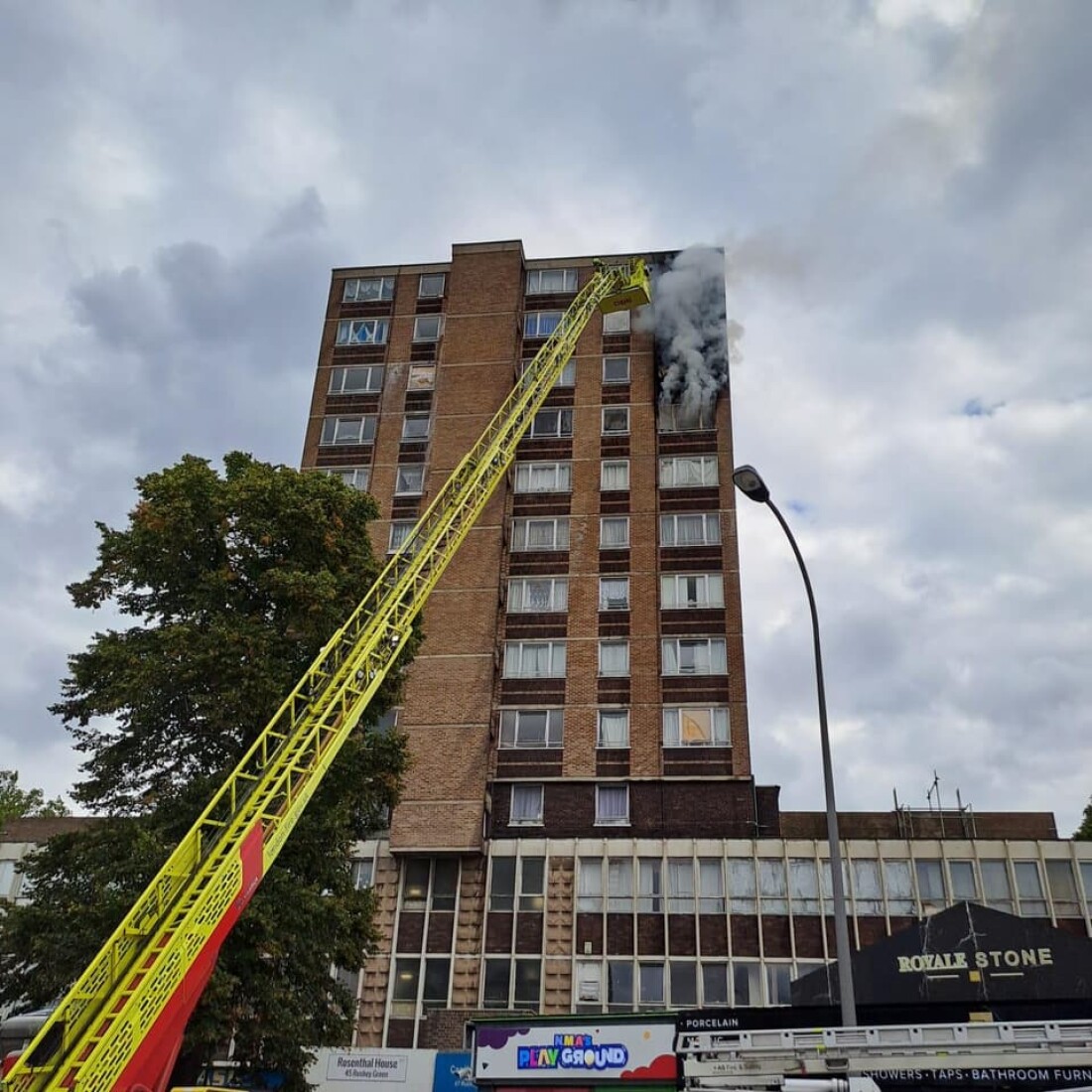


A fire in a15-storey residential building in Greater Manchester, Eccles has provided further real-world evidence of the value of retrofitted residential sprinkler systems in high-rise residential dwellings.
Following the Grenfell Tower fire, the landlord made the proactive decision to install life-safety sprinkler systems across 1,300 homes in its high-rise residential portfolio. That investment has now demonstrated its worth after a kitchen chip-pan fire was contained, controlled and extinguished when the sprinkler system operated. No injuries were reported.
The incident also challenges a common misconception that residential sprinklers should not be used as an extinguishing medium for chip-pan fires. In this case, the system helped prevent fire spread, protected residents and firefighters, and limited property damage.
The Greater Manchester incident stands in stark contrast to the 2024 fire at Rosenthal House, a high-rise residential block in Catford owned by Lewisham Council (pictured). That fire involved two flats on the ninth and tenth floors and required substantial London Fire Brigade resources to control and extinguish the fire. Sprinklers were not fitted.
The Incident
- On the 2 August at 07:54, Greater Manchester Fire Rescue Service mobilised four fire appliances to reports of a fire involving a 15-storey residential building containing 88 flats.
- On arrival, the incident commander confirmed that a fire in a one-bedroom flat had been extinguished following activation of the sprinkler system.
- The fire involved cooking materials and was understood to have started as a chip-pan fire.
- No injuries were reported, and the tenants evacuated the dwelling to a place of safety.
- Fire damage was limited to the room of origin, with minor water egress reported to the flat below.
Key facts
The sprinkler system
• Prevented escalation beyond the flat of origin.
• Contained and extinguished the fire, reducing risk to firefighters.
• Allowed valuable time for the tenant to reach a place of safety.
• Provided additional confidence and support for firefighters operating in a high-rise environment.
• Reinforced the importance of active fire protection systems in minimising fire-related risk. Sprinkler System Coverage
• The system covers dwellings, communal areas, bin rooms and scooter storage facilities.
• The water supply is provided through a cold-water booster supply.
BAFSA's position
The outcome of this incident provides further evidence to support the British Automatic Fire Sprinkler Association’s (BAFSA) advocacy work, turning operational experience into persuasive evidence for policy and parliamentary engagement. BAFSA welcomed the Government’s November 2020 decision to lower the height threshold for mandatory sprinklers in purpose group 1a residential blocks of flats from 30 metres to 11 metres. However, concerns remain about the absence of requirements to retrofit sprinklers in existing residential buildings.
In line with the National Fire Chiefs Council sprinkler position statement, BAFSA advocates government action to mandate the retrofitting of sprinklers in high-rise residential buildings. This should include all existing residential buildings over 18 metres in height, buildings of at least seven storeys served by a single staircase, and existing residential buildings over 11 metres where risk assessment supports retrofit.
With thanks to Greater Manchester Fire Rescue Service for reporting this incident.
Pictured: Rosenthal House Fire Catford London