

Sprinklers contain third-floor flat fire in high-rise block
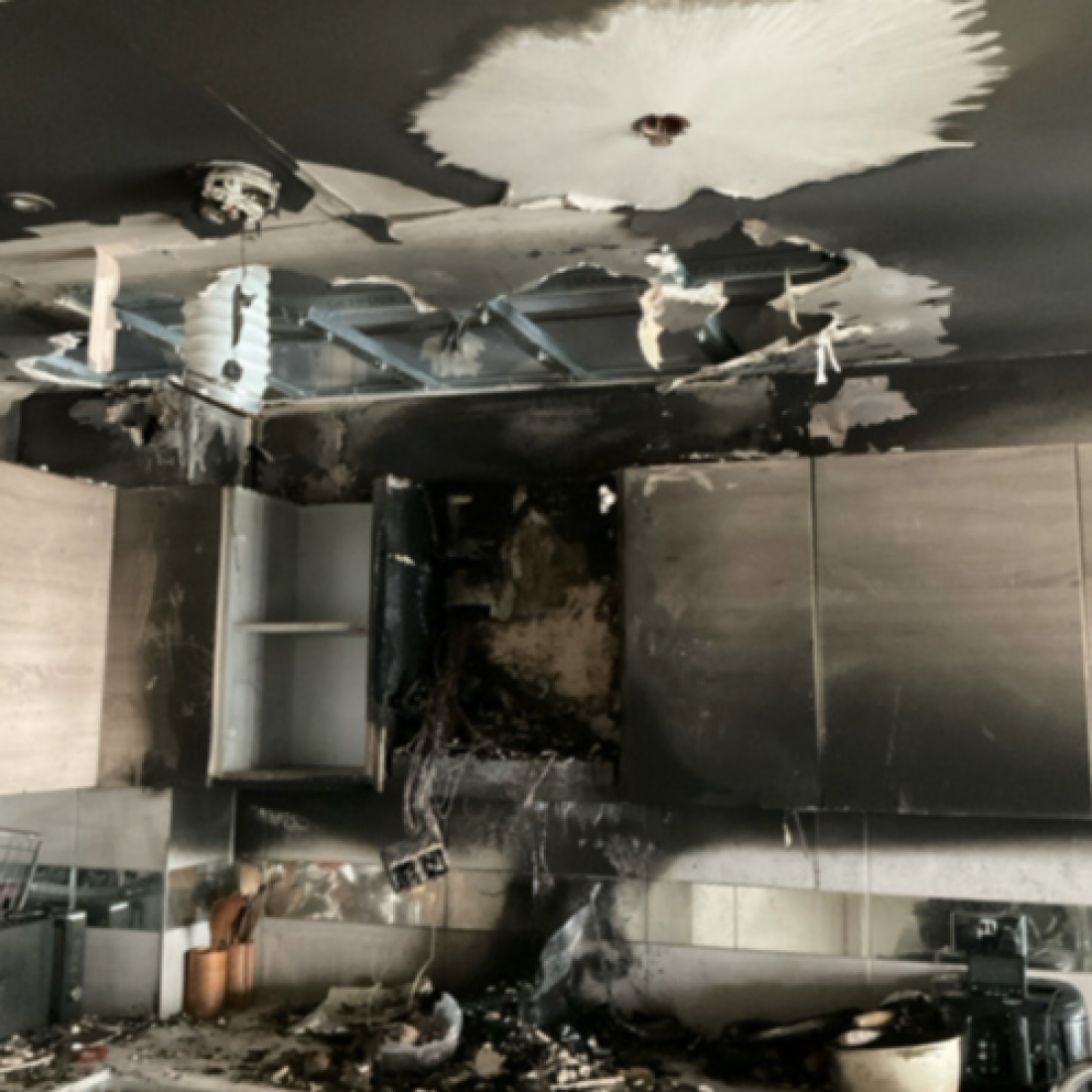


A fire that began in the kitchen of an open-plan kitchen/lounge flat on the third floor of a 17-storey residential block was successfully contained by the building’s sprinkler system, preventing what could have been a far more serious incident.
The fire is believed to have started accidentally when cooking oil ignited in a pan. One occupant safely left the building before the arrival of the London Fire Brigade.
Crucially, two concealed sprinkler heads activated in response to the rising heat at ceiling level. As temperatures increased, the cover plate of the sprinkler nearest the fire disengaged, releasing the deflector plate. Continued heat exposure caused the liquid within the sprinkler’s glass bulb to expand until it shattered, releasing the plug and allowing water to discharge. The water struck the deflector, creating a uniform spray pattern directly over the fire. ( see image) This rapid, automatic response controlled and contained the fire at its earliest stage.
Evidence of the sprinkler system’s effectiveness was clear. The cooking extractor fan positioned directly above the seat of the fire was completely destroyed, and smoke staining was visible at ceiling level and on nearby wall units. However, a distinctive circular water spray pattern around the activated sprinkler head showed where water had prevented smoke jets from spreading further across the ceiling. Fire damage was limited to the immediate area, significantly reducing the potential for fire spread throughout the flat or beyond.
Once firefighters confirmed the fire was fully extinguished, the sprinkler system serving the individual flat was isolated.
The sprinkler system had been installed in accordance with BS 9251, the Code of Practice for Fire Sprinkler Systems in Domestic and Residential Occupancies, and was supplied by a shared cold-water booster main.
This incident provides powerful operational evidence of the life-saving and property-protecting benefits of residential sprinklers. In a 17-storey building, an uncontrolled kitchen fire could have rapidly developed, threatening multiple floors and placing residents and firefighters at significant risk. Instead, the sprinkler system intervened automatically, containing the fire before it could escalate.
The government’s 2020 decision to lower the height threshold for mandatory sprinklers in new residential blocks from 30 metres to 11 metres was an important step forward. However, many existing residential buildings remain without this vital protection.